Millionaire Services The Millionaire Blueprint: Crafted for Success
10-24-2025
Updates.
Well, I missed writing daily on my blog, but I am not going to beat myself up about it. Life has been busy, and I have been asking God to show me where to focus my time and energy. Over the past few weeks, several nonprofits have reached out, and I’ve felt drawn to help them.
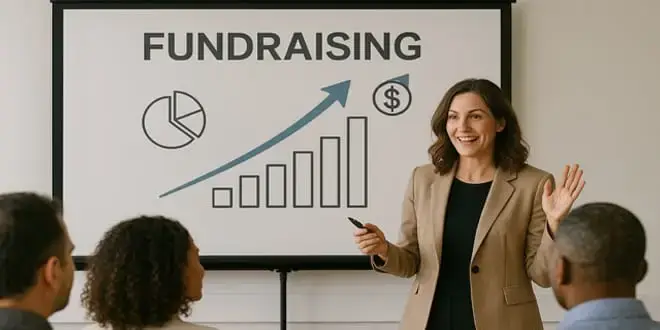
I’ve always had a passion for supporting nonprofits in all sorts of ways. However, one topic always rises to the top: Fundraising!
Friend-Raising.
First and foremost, every nonprofit needs to realize that before you ever raise money, you must friend-raise. In other words, your most loyal supporters should be among those serving on your board of directors. This group should consist of community leaders who are willing to give their time, talent, and treasure. After all, if a board member won’t give financially to their own organization, why should anyone else?
If your board members only rubber-stamp the staff’s recommendations or push all fundraising responsibility onto paid employees, what purpose do they serve? Finally, board members must have both connections and influence!
Nonprofits Need to Operate Like a Business.
If you stop and think about it, what is a business? In short, every business sells either products, services, or both. The vast majority of nonprofits, meanwhile, provide a service—and ideally, they meet an unmet need in the community.
Unfortunately, most executive directors and development staff rarely receive the support they need to succeed. These professionals often have to be self-motivated and self-taught. Too many are underpaid and spend their days putting out fires instead of growing the organization.
Over the years, I’ve met countless executive and development directors, and I’d estimate that 98% of them never leave the safety of their offices. Only a small handful act as true ambassadors—meeting with the media, engaging donors, speaking to civic groups, and staying active on social media. Those few truly understand the importance of constantly selling and promoting their organization.
Fundraising.
Let me approach this topic from the perspective of a donor. While there are thousands of great causes, I personally choose to support only a few. For those select ones, I need to feel a personal connection. Since my background is in business, I also want to see an ROI—a return on my investment—meaning I expect to see measurable, positive outcomes from the donations I make.
Sadly, too many nonprofit staff members view donors as ATMs. Even worse, some assume that because someone is wealthy, money must mean less to them. This mindset couldn’t be further from the truth. I can’t count the number of times I’ve heard someone say, “He’s a millionaire—asking for $5,000 is nothing!” It’s absurd.
Every donor is different, and just like in any relationship, you need to understand their “love language.” For most supporters, genuine gratitude and sincere communication go a long way.
Fundraising Master Class (Abbreviated).
People give to people long before they give to an organization. Therefore, deciding who makes the ask for a contribution is crucial. And as mentioned earlier, you must friend-raise before you fundraise.
Too often, nonprofits approach fundraising with a beggar’s mindset instead of standing confidently in their convictions. Likewise, many executive and development directors hide behind their desks rather than engaging directly with the community.
Civic and Service Clubs That Meet Regularly.
Here’s a list of common community service organizations that often welcome nonprofit speakers and partnerships. These groups offer valuable opportunities for outreach, education, and visibility.
Rotary Clubs – International service organization focused on community and global initiatives. Meet weekly or monthly. www.rotary.org
Kiwanis Clubs – Serve children and youth in local communities. Meet weekly or biweekly. www.kiwanis.org
Civitan Clubs – Focus on helping people with developmental disabilities. Meet monthly or biweekly. www.civitan.org
Lions Clubs – Support vision care, hunger relief, and environmental causes. www.lionsclubs.org
Optimist Clubs – Promote a positive outlook and serve youth. www.optimist.org
Exchange Clubs – Focus on Americanism, youth, and community service. www.nationalexchangeclub.org
Junior League – Women’s organization focused on community impact and leadership. www.ajli.org
Women’s Clubs / GFWC – Emphasize volunteer service and civic engagement. www.gfwc.org
Tips for Engagement.
- Find your local chapter: Search “[Club Name] + [Your Town/County]”
- Offer a speaker program: Many clubs welcome presentations from nonprofits.
- Bring visuals: Use photos, slides, or anything to make it memorable.
Another key group to connect with is your local Chamber of Commerce, where you can meet business owners and promote your mission.
Fundraising Basics – Where to Look for Funding.
- Federal
- State
- County
- City
- Bank Trust Departments
- Community Foundations (Donor-Advised Funds)
- Organizational Foundations (e.g., hospital or medical)
- United Way
- Private Foundations
- In-Kind Contributions
- Businesses
- Individuals
- Planned Gifts (via CPAs or estate attorneys)
- Leverage every relationship—insurance, utilities, waste management, pest control, and more.
Because this is a short article, I can’t go into all the details of how to access each of the above-listed sources. However, if you want to learn more feel free to contact me if you have questions.
Additional Resources for Nonprofits.
Software Contributions: www.techsoup.org
National Association for the Exchange of Industrial Resources (NAEIR): www.naeir.org
In short, NAEIR helps companies donate unsold products to nonprofits. Members pay only a small processing fee but can receive tens of thousands of dollars’ worth of free merchandise each year—from office supplies to electronics.
Inexpensive Supplies for Shelters: www.startriteinc.com
Start-Rite, founded in 1997, provides affordable supplies to nonprofits and transitional housing programs. Their goal is to enhance the quality of life while keeping prices budget-friendly for organizations nationwide.
Educational Surplus (ECU): https://purchasing.ecu.edu/surplus/
State Surplus: https://www.doa.nc.gov/divisions/state-surplus-property
Federal Surplus: https://www.doa.nc.gov/divisions/federal-surplus-property
If you have any questions or comments, please don't hesitate to contact me. Additionally, please explore the rest of my blog and website to see if any of this information can be helpful to you.
To learn more, visit the blog life, reflection, and faith.